
BNB Tests $669 After $1.32B Burn, Cardano Whales Load Up, Pepeto Presale Circulates
BNB tests $669 after a $1.32B quarterly burn on April 15, Cardano whales hit a 4-month high per Santiment, and the Pepeto presale circulates.

What to Know
- BNB Chain destroyed 2.14 million BNB worth roughly $1.32 billion in its 35th quarterly auto-burn on April 15, with the token pressing $669 resistance.
- Santiment data shows 424 Cardano wallets now hold 10 million ADA or more, a four-month high, after accumulating 819 million ADA worth about $214 million.
- The Pepeto presale claims $9.29 million raised at $0.0000001865 per token according to its own dashboard, a figure that is not independently verified.
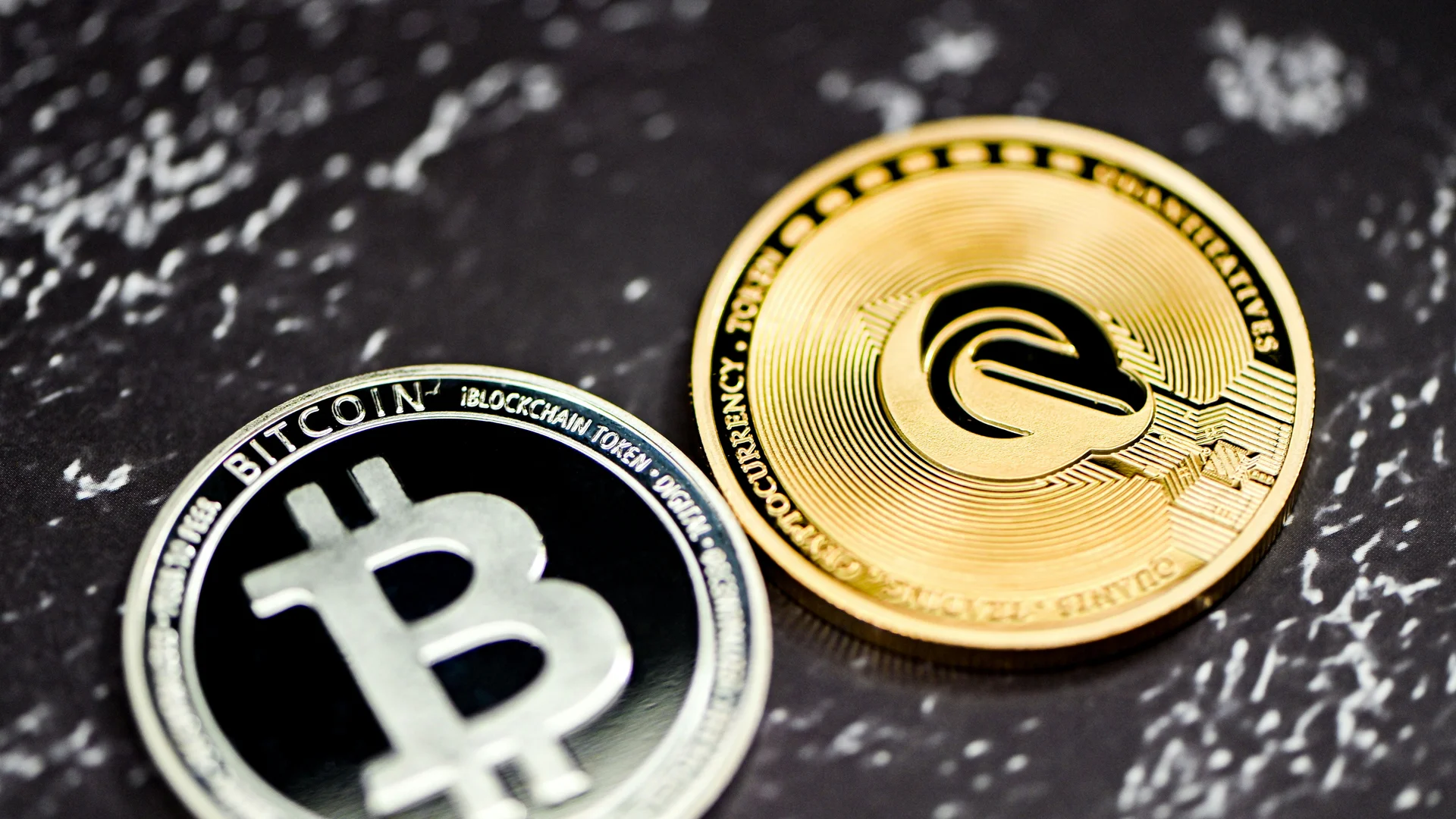
The best crypto to buy now conversation got louder on Tuesday after two verifiable data points dropped on the same week. BNB climbed to $649 on April 22 and is now pressing $669 resistance, days after BNB Chain incinerated 2.14 million tokens in its latest quarterly auto-burn. On the Cardano side, blockchain analytics firm Santiment reported that the number of wallets holding 10 million ADA or more just hit a four-month high. Sitting quietly next to both stories is the Pepeto presale, a pre-market memecoin being heavily promoted across sponsored content channels, with claims that deserve more scrutiny than the press releases give them.
What Did the BNB Auto-Burn Actually Do?
BNB Chain confirmed its 35th quarterly BNB auto-burn on April 15, removing 2.14 million BNB worth roughly $1.32 billion at the time of execution. That is not a rounding error. The burn mechanism, baked into BNB tokenomics since 2021, is formula-driven: it uses the token's price and the number of blocks produced on BNB Chain during the quarter to calculate the burn size. No committee vote. No discretionary call. It just runs.
The market response was measured, not manic. BNB rose 2.58% on April 22 to close at $649, according to CoinMarketCap data, with intraday volume near $996 million and RSI at 62.5. That RSI is warm but not overheated. Support sits at $605. Resistance is the $669 level, and a clean break there opens room toward $700.
There is also a regulatory overhang worth flagging. Grayscale's GBNB spot ETF filing remains at the SEC, as does VanEck's parallel application. Neither has a decision date locked in. Analyst price targets for the cycle cluster in the $880 to $1,400 range, but those depend on ETF approval, which is not guaranteed.
The burn formula is one of the few tokenomic mechanisms in crypto that actually reduces supply on a predictable schedule. Whether the market prices that in ahead of time or reacts on the day is the real question.
Cardano Whales Are Accumulating, Here Is What the Data Shows
On-chain data from Cardano whale wallets tracked by Santiment shows 424 addresses now hold 10 million ADA or more. That is a four-month high. Those wallets collectively accumulated 819 million ADA, worth roughly $214 million at current prices, during the recent price weakness. ADA itself trades at $0.25, up 0.76% on the day.
Whale accumulation during drawdowns is not a guarantee of a bounce. It is, however, a behavioral signal that the largest holders are adding rather than distributing. That matters more on a chain like Cardano, where a single whale can meaningfully shift the float without leaving an obvious footprint on centralized exchanges.
Cardano's on-chain activity is doing some of the work. The community recently approved a $71 million treasury allocation for the Hydra and Leios scaling rollouts, funded through late 2026. Developer commits hit 735 over a single weekend in April. Forecast models land in a wide spread: CoinCodex models $0.38 by the end of Q2, Benzinga targets $0.48 to $0.57, and Coinpedia's outlier projection stretches to $2.75 to $3.25 on a full scaling delivery. The high end is optimistic. The low end is more defensible.
So Where Does Pepeto Fit Into This?
Here is where the story shifts from market data to marketing. The Pepeto presale has been promoted across sponsored crypto coverage as the speculative companion trade to the BNB and Cardano moves. According to the project's own dashboard, the presale has raised $9.29 million at a token price of $0.0000001865. That number comes from Pepeto's site, not from an independent accounting of wallet inflows. Readers should treat it that way.
The project claims a SolidProof audit was completed before the raise opened, and it advertises a 179% APY on staked presale tokens. Yields on pre-market tokens carry substantial risk and are not independently verified. A headline APY means nothing if the underlying token never lists, or lists and trades below presale price. That is the risk profile presale buyers accept, whether or not the marketing spells it out.
The project also claims its lead builder previously scaled a meme asset past a $7 billion market cap. That claim appears only in project materials and has not been independently verified by this publication. Pepeto's stated roadmap includes a cross-chain bridge connecting Ethereum, BNB Chain, and Solana, positioned by the team as exchange infrastructure rather than a pure meme play.
None of this means Pepeto is a scam. It also does not mean it is an opportunity. It means it is a pre-market token in an unregulated segment, where the only verified facts are the ones investors can confirm on-chain themselves.
Presale pitches love to compare themselves to BNB's 2017 ICO. The survivorship bias is the whole trick. For every BNB, there are hundreds of presales that shipped a listing price below the presale round.
What Is Actually Verifiable This Week?
Strip out the marketing and the verifiable data is narrow but solid. BNB burned a quantifiable supply. Cardano whales are accumulating on-chain in a way Santiment can prove with wallet-level data. Bitcoin cleared $77,541 on the week, helped along by Strategy's disclosed $2.54 billion buy, which added 34,164 BTC to its treasury.
Those three facts are the news. The rest, including yield projections, presale ROI math, and comparisons to 2017-era returns, is not news. It is promotional material. A reader deciding where to allocate this week should separate the two.
The question to ask about BNB is whether the burn schedule plus a potential ETF approval justifies the current price. The question to ask about Cardano is whether whale accumulation plus funded scaling work can lift ADA out of its range. The question to ask about Pepeto is simpler. Can the project's claims about audits, raise totals, and team track record be independently verified? If the answer is no, the position sizing should reflect that.
- Verifiable: BNB burn size, BNB price, Cardano whale wallet counts, ADA price, Bitcoin price, Strategy's BTC purchase
- Project-sourced: Pepeto raise totals, staking APY, founder claims, audit attestation
- Unverifiable without further proof: any forward-looking yield, any presale ROI math, any comparison to past ICO multiples
How Should Traders Read This Week?
The answer-first version: the large-cap setups are real, the presale narrative is marketing, and the reader should treat them differently. BNB's $669 resistance is a genuine technical level with a hard supply event behind it. Cardano's whale accumulation is a behavioral signal with on-chain receipts. Neither is a trade recommendation. Both are data.
Presales occupy a different risk tier entirely. They are illiquid, unregulated, and structured so that the earliest buyers always have the lowest cost basis. That structure works until it does not. Anyone sizing a position in a pre-market token should assume the full capital can be lost, treat every promotional claim as unverified until proven, and ignore APY headlines that price yield on a token with no live market.
The bull run, if it continues, will reward conviction. It will also reward patience. The difference between those two is whether the thesis is built on verifiable data or on a press release.
Frequently Asked Questions
What is the BNB auto-burn?
The BNB auto-burn is a quarterly deflationary mechanism that removes BNB tokens from circulation based on a formula tied to the token's price and BNB Chain block production during the quarter. The 35th burn on April 15, 2026 destroyed roughly 2.14 million BNB worth about $1.32 billion.
Why are Cardano whales accumulating ADA?
Santiment data shows 424 wallets now hold 10 million ADA or more, a four-month high, after accumulating 819 million ADA during recent price weakness. Whale accumulation during drawdowns is a behavioral signal but does not guarantee a price bounce. It shows the largest holders are adding rather than selling.
Is the Pepeto presale verified?
No. The project claims $9.29 million raised, a SolidProof audit, and 179% APY, but those figures come from the project's own dashboard and promotional materials. They have not been independently verified by this publication. Presale tokens carry substantial risk, and readers should treat all marketing claims with skepticism.
What makes a crypto presale risky?
Presales are illiquid, unregulated, and structured so early buyers have the lowest cost basis. A token may never list, may list below presale price, or may face audit, custody, or team-related issues. Forward-looking yields and ROI projections on pre-market tokens are not independently verifiable and should not be treated as news.


