
Hoskinson Pins Cardano Top 10 Comeback on Nine IOG Treasury Proposals
Charles Hoskinson says nine IOG treasury proposals, Leios, and April 22 DRep votes will decide if Cardano returns to the top 10 crypto market cap rank.
What to Know
- $46.8 million (about 166 million ADA) is the size of the 2026 IOG treasury request, roughly 52% lower than last year.
- Nine proposals are on the ballot, led by Leios, a consensus upgrade targeting 1,000+ TPS with a testnet in June 2026.
- DRep voting through Intersect runs April 22 to May 24, 2026, with ratification expected right after the epoch closes.
- ADA is defending the $0.23 area. A reclaim of $0.25 to $0.26 is the line analysts want back in buyer hands.
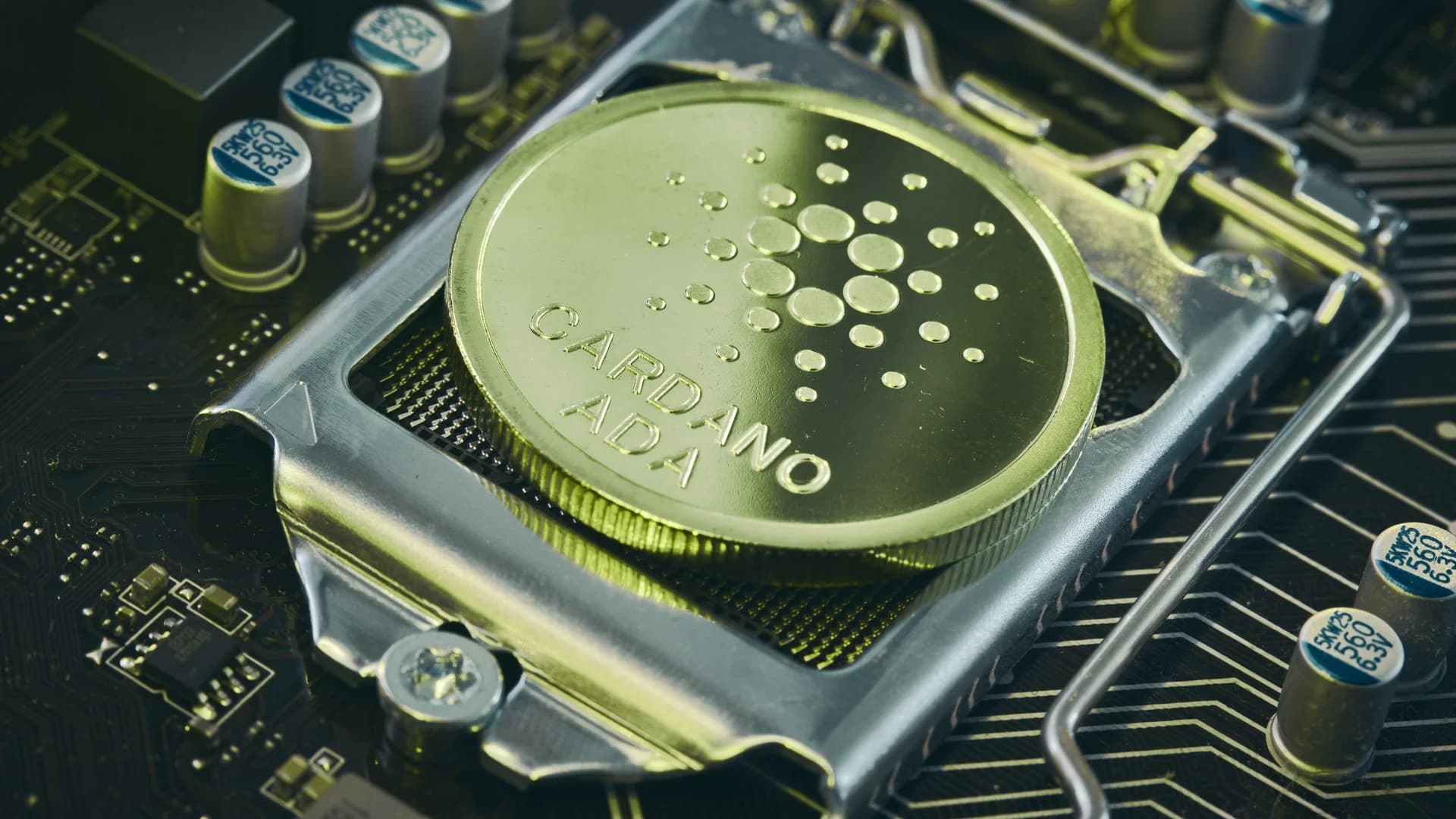
The Cardano top 10 market cap argument now has a price tag, a ballot, and a deadline. Charles Hoskinson, in a post on X, said nine proposals sitting in front of Cardano voters are what he thinks the network needs to climb back into the top ten and beyond. The Cardano founder framed the next few months as a governance question more than a technology question. Elections, a leaner treasury ask, and a roadmap the community gets to approve or kill. That is the whole story.
A Smaller Treasury Ask and a Bigger Governance Moment
Input Output Global, the team that has carried most of Cardano's core engineering since day one, is asking the community for less money, not more. The IOG treasury proposals total $46.8 million, or roughly 166 million ADA, across nine line items for 2026. That is about 52% lower than last year's request.
Read that number twice. A core developer is voluntarily shrinking its own budget in a bear-ish tape, and then handing the approval button to DReps. Call it fiscal discipline, call it a political maneuver to prove decentralization actually works. Either way it changes the pitch. Cardano is no longer Hoskinson saying what ships. It is a membership organization deciding what survives.
What Are the Nine Cardano Proposals on the Ballot?
The nine proposals cluster around three themes: scaling throughput, plugging into Bitcoin, and giving developers better economics. The headline item is Ouroboros Leios, a consensus redesign that aims to lift Cardano's throughput by 10 to 65 times and eventually push past 1,000 transactions per second. A Leios testnet is scheduled for June 2026. The mainnet launch candidate is targeted for year-end.
Pogun is the Bitcoin play. It would bring BTC-backed credit markets, yield products, and trust-minimized bridge plumbing into Cardano. Babel Fees would let users pay network fees in native tokens instead of being locked to ADA. The rest of the package covers Hydra and Midgard layer-2 work, Plutus smart contract upgrades, a new cardano-init developer toolkit, higher-assurance verification, core maintenance and security monitoring, plus expanded API and data services.
- Leios: throughput overhaul, target above 1,000 TPS
- Pogun: Bitcoin credit markets and trust-minimized bridges
- Babel Fees: pay gas in native tokens, not just ADA
- Hydra and Midgard: layer-2 scaling infrastructure
- Plutus upgrades: smart contract environment improvements
- cardano-init: new developer tooling
- Higher-assurance verification systems
- Core maintenance and security monitoring
- Expanded API and data services
The DRep Vote: April 22 to May 24
Here is where the mechanics matter. Voting is being run through Intersect Cardano governance, the member-based organization the network spun up to handle community decisions. Delegate Representatives, known as DReps, cast votes through the Ekklesia governance platform. The window opened April 22 and closes May 24, 2026, with ratification expected shortly after the voting epoch wraps.
Hoskinson told followers the next few months will be "an interesting time." Read between the lines. He is acknowledging that the community might not green-light everything, and that other voices could end up steering parts of the roadmap. That is the whole point of DRep governance. It was always going to be messy the first time a funding cycle ran through it.
Projects which succeed will be pursued, while those that fail will be shut down.
Why Leios Is the One Everyone Is Watching
Of the nine proposals, Leios is the one that actually moves the needle on the "top 10" argument. Cardano's throughput has been its loudest criticism for years. A consensus upgrade that credibly delivers four-digit TPS is the kind of change that forces exchanges, DeFi builders, and analysts to re-rate the network. Anything less than that is iteration.
A June 2026 testnet is aggressive, but it is not unreasonable given how long IOG has been publishing Leios research papers. The real test is whether the mainnet candidate lands by year-end without the kind of delays that have historically dogged Cardano hard forks. If Leios slips into 2027, the top ten pitch slips with it.
Pogun deserves more attention than it is getting. Bitcoin-backed credit and trust-minimized bridges are exactly where capital is flowing across the rest of crypto. If Cardano builds a credible BTC layer without the wrapped-asset risks that have blown up elsewhere, that is a differentiator. On paper.
ADA Price Action: $0.23 Holds, $0.26 Is the Line
The chart is the other half of the story. ADA has started building higher lows after bouncing from the $0.23 zone. Short-term structure watchers say reclaiming the $0.25 to $0.26 band is the trigger for saying buyers have meaningful control again.
Clear that level and the next resistance zone sits around $0.265 to $0.27, where selling pressure tends to pick up. A breakout through that band points toward liquidity between $0.28 and $0.30. On the downside, losing the recovery levels would open up another test of lower support.
Do not confuse governance momentum with price momentum. ADA can rally on a Leios vote and still fail at $0.27 because macro liquidity is doing something else entirely. The vote is a catalyst window, not a floor.
What This Means for ADA Holders
If you are holding ADA, the next month is structurally different from the last twelve. You are not waiting for a single Hoskinson keynote. You are watching nine separate votes, each with its own fate, each with its own impact on the roadmap. Some will pass clean. Some will get shredded. That is what decentralization actually looks like when the money is on the table.
The cynical read: a 52% budget cut signals IOG is preparing for a leaner year and letting the community take the heat for what gets killed. The optimistic read: Cardano is finally putting its governance model through a real stress test, and a network that can ship under community control is worth more than one that ships under a founder's direction. Pick your frame.
Frequently Asked Questions
What did Charles Hoskinson say about Cardano reaching the top 10?
Hoskinson said on X that nine IOG treasury proposals now in front of Cardano voters are what he believes the network needs to return to the top ten crypto market cap rank. He tied the path forward to elections, funding, and community governance outcomes rather than a single upgrade.
How much is IOG asking Cardano voters to approve for 2026?
Input Output Global submitted nine proposals totaling roughly $46.8 million, or about 166 million ADA. That figure is approximately 52% lower than the prior year's treasury request and is designed to fund operations, scaling work, and ecosystem tooling through 2026.
What is Leios and when does it launch?
Leios is a Cardano consensus upgrade designed to raise throughput by roughly 10 to 65 times, eventually targeting more than 1,000 transactions per second. A testnet is scheduled for June 2026, and a mainnet launch candidate is targeted by the end of 2026 according to the current proposal.
When does the DRep vote end?
Voting runs from April 22 to May 24, 2026, through Intersect, Cardano's member-based governance organization. Delegate Representatives cast their ballots on the Ekklesia platform, and ratification is expected shortly after the voting epoch closes at the end of May.


